
WT1 Pro or WT1 Lite: Which Environmental Monitoring Station Should You Choose?
The WT1 Pro is designed to monitor emissions at the source and around site perimeters. The WT1 Lite focuses on monitoring at site boundaries and in urban environments, with simplified configurations. The choice depends on the parameters to be monitored, the measurement conditions and the information needed to take action.
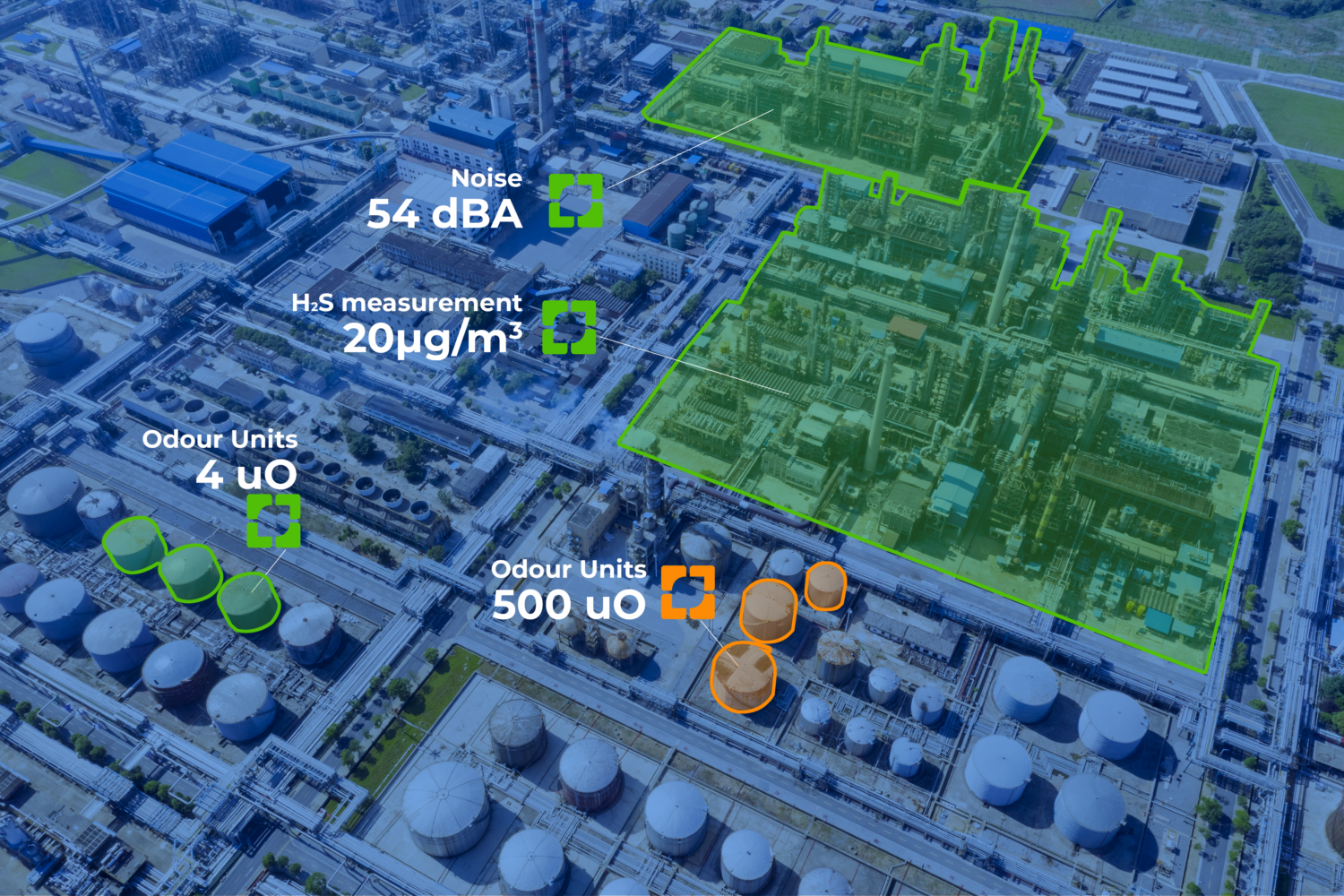
Depending on their configuration, both outdoor stations can combine gas, particulate matter, odour and noise monitoring. Connected to EllonaSoft, they enable teams to track trends, analyse events and receive alerts.
Start with the question you want to answer
Before comparing sensors, it is useful to define the purpose of the monitoring system:
- Characterise emissions as close to their source as possible: monitor a facility, process or operational area.
- Monitor what is detected around a site’s perimeter: document variations near neighbouring communities or other sensitive areas.
- Monitor several areas across a territory: compare local conditions and detect events.
- Understand the origin of an episode: combine measurements from several stations with weather data and operational information.
These objectives can complement one another. A single project may therefore combine several station configurations.
What are the differences between the WT1 Pro and the WT1 Lite?
| Criterion | WT1 Pro | WT1 Lite |
|---|---|---|
| Primary application | Monitoring at the source and around site perimeters | Monitoring around site perimeters and in urban environments |
| Measurement settings | Area and ducted sources, with a setup adapted to sampling conditions | Ambient air, site boundaries, neighbourhoods and operational areas |
| Ducted sources and sample conditioning | Can be combined with the DRYER to adapt gas sampling and conditioning to measurement requirements | Ambient air monitoring around emission sources |
| Sample collection for further analysis | Control of sampling equipment, including the 4WAYS sampler, enabling up to four sample collections depending on the configuration | No sample collection capability |
| Built-in parameters | Temperature, humidity, atmospheric pressure | Temperature, humidity, atmospheric pressure, total VOCs |
| Optional gas sensors | Up to 6 electrochemical sensors and 2 optical sensors | Up to 4 electrochemical sensors and 1 optical sensor |
| Particulate matter | Several options available | Several options available |
| Odour functionality | Board with 4 MOX sensors: odour quality and intensity | Board with 4 MOX sensors: odour quality and intensity |
| Noise measurement | Optional | Optional |
| Odour quantification correlated with olfactometric reference measurements | Available for the WT1 Pro, subject to application-specific requirements | Requirements to be discussed with the technical teams |
| Activation of third-party equipment | Via API or wired connection, depending on the integration | Via the EllonaSoft API, depending on the integration |
| Analytics platform | EllonaSoft | EllonaSoft |
Maximum capabilities do not represent a standard configuration. Sensors, measurement ranges, conditioning and sampling accessories, and analytics functions are specified according to project requirements.
The DRYER and 4WAYS sampler are presented in the “Accessories” section of the WT1 Pro page.
When should you choose the WT1 Pro?
The WT1 Pro is suited to projects requiring a broader range of instrumentation, emissions monitoring at area or ducted sources, or the ability to trigger sample collection to investigate an event in greater detail.
It can be considered for:
- monitoring ducted sources, such as stacks, extraction ducts and process outlets, using an appropriate sampling and conditioning setup;
- characterising area sources, such as biofilters, basins and storage areas;
- monitoring more gases simultaneously;
- developing odour monitoring with quantification correlated with reference analyses;
- controlling the collection of air or gas emission samples, using dedicated accessories for further analysis;
- integrating a wired connection to equipment on site.
The DRYER for monitoring ducted sources
The WT1 Pro can be combined with the DRYER system to adapt gas sampling and conditioning to measurement requirements. This configuration supports the monitoring of ducted emissions whose conditions, particularly humidity, require sample preparation before analysis.
The setup is designed according to temperature, humidity, expected concentrations and the compounds of interest.
Sample collection to complement continuous monitoring
The WT1 Pro can be combined with sampling equipment to collect samples for further analysis, including chemical or olfactometric analysis.
The 4WAYS sampler enables up to four sample collections, depending on the selected configuration. Sampling can be triggered by a detected event or by conditions defined during system configuration.
This capability makes it possible to:
- document a short-lived episode by collecting samples during the event;
- compare continuous measurements with sample analysis results;
- expand the reference data used to characterise emissions and recognise their signatures.
The sampling method, containers and storage conditions are selected according to the compounds of interest and the planned analyses.
Find the DRYER, the 4WAYS sampler and other sampling accessories in the “Accessories” section of the WT1 Pro page.
These requirements are particularly relevant to waste treatment, wastewater treatment, and heavy and processing industries.
Choosing the WT1 Pro therefore involves assessing the entire measurement chain: sampling point, sample transport and conditioning, sensors, additional sample collection and data analysis.
Further reading: How can outdoor pollutant gas emissions be measured, identified and located?

When should you choose the WT1 Lite?
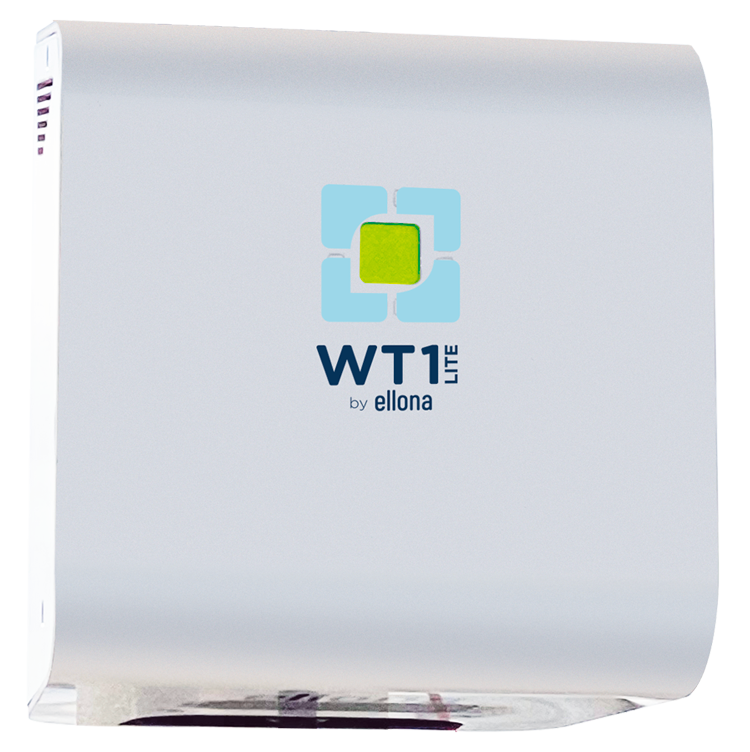
The WT1 Lite is suited to ambient air monitoring projects around site perimeters or across a wider area.
It can be considered for:
- tracking variations in gases, particulate matter or odours at site boundaries;
- documenting events near residential areas;
- deploying multiple monitoring points across a city or operational area;
- monitoring a selection of target gases with a simplified configuration.
This approach is particularly relevant to cities and local authorities, ports and airports, as well as perimeter monitoring at industrial sites.
Both models can be used in these sectors: the choice depends on the objective and configuration of each monitoring point.
The WT1 Lite benefits from EllonaSoft’s analytics capabilities. The hardware configuration and associated analyses are defined according to the information required.
Can the WT1 Pro and WT1 Lite be combined?
Yes. A monitoring network can combine both models to monitor emission sources and their surrounding environment.
For example, WT1 Pro stations can monitor specific sources on site, while WT1 Lite stations record variations around the perimeter. The data is brought together in EllonaSoft to facilitate comparison.
This approach makes it possible to link:
- events observed near the sources;
- measurements recorded at site boundaries;
- weather conditions;
- operations taking place at the same time.
Combining this information helps investigate the origin of episodes and assess the actions taken. However, source attribution depends on the network design, the available reference data and data quality.
Explore examples of environmental monitoring in our case studies.
How can you prepare to select your configuration?
To design the monitoring system, gather the following information:
| Information to specify | Purpose for the project |
|---|---|
| Monitoring objective | Define the expected outcomes: detection, characterisation, identification or assessment of actions taken |
| Sources and sensitive areas | Determine monitoring point locations |
| Target gases and particles | Select sensors and their measurement ranges |
| Odour monitoring requirements | Define the reference data and training required |
| Site conditions | Plan sampling, power supply, connectivity and maintenance |
| Required actions | Set up alerts and any interfaces with third-party equipment |
Choosing a model is therefore part of a complete approach: measuring, understanding events and helping teams take action.
To refine your monitoring requirements, also consult our FAQs on:
- measuring and identifying fine particulate matter outdoors;
- measuring and locating outdoor noise sources.
Frequently asked questions
Is the WT1 Pro always preferable to the WT1 Lite?
The WT1 Pro offers a broader range of instrumentation. The WT1 Lite can fully meet perimeter or urban monitoring needs. The right choice is the one that provides the information needed to achieve the defined objective.
Can the WT1 Lite be used for odour monitoring?
Yes, odour functionality is available. The expected outcomes—detection, characterisation, signature recognition or quantification—must be specified when defining the project.
To understand these different approaches, consult our FAQ on outdoor odour monitoring.
Can both models trigger actions?
Yes, depending on the planned configuration and integration. The WT1 Pro supports interfaces via API or wired connection. The WT1 Lite can help trigger actions through the EllonaSoft API.
The stations provide monitoring and transmit the necessary information or commands. Treatment equipment consists of third-party systems integrated into the site’s setup.
What about monitoring indoor environments?
WT1 stations are designed for outdoor use. For offices, schools and other buildings and public facilities, discover the POD2.
Our FAQs explain indoor monitoring approaches according to your needs:
- Measuring, identifying and locating gas emissions indoors;
- Measuring, identifying and locating fine particulate matter indoors;
- Measuring, identifying and locating odours indoors.
What about mobile dust investigations?
To complement fixed monitoring with mobile measurements, particularly in the construction sector, explore the Dustkair solution.
The choice between a fixed station and a mobile device depends on the area being investigated, the monitoring duration and the measurement objective.
Further reading
Explore the specifications of the WT1 Pro and WT1 Lite, the capabilities of EllonaSoft and our case studies.
Planning a monitoring project? Describe your site and objectives to determine the right configuration.